
Research Article | | Peer-Reviewed

The Role of Pectins in the Body Image Formation on the Turin Shroud

Received: 28 November 2025     Accepted: 11 December 2025     Published: 29 December 2025
Views:       Downloads:
Abstract

UV-induced fluorescence (UVIF) data that were obtained in the 1978 investigation of the Turin Shroud, were recently revisited by Pellicori supporting different behavior of background, non-image, and body image areas. Based on the experimental literature results, the chemical nature of that difference is discussed here. Former enzymatic analysis using pectinase indicated the presence of pectic substances, but only for fibers extracted from the background non-image areas. On the other hand, the high content of pectins in the primary cell wall (PCW) of flax fibers is well documented. The PCW is a thin outermost layer of fibers of approximately 0.2 μm, which corresponds to the layer where the body image is seen. Pectins are easier oxidized and destroyed than cellulose, the main component of the linen. In the present paper, pectins from the PCW of the linen fibers are proposed to participate in the initial stage of body image formation on the Turin Shroud, although they have been destroyed in that process. To demonstrate the presence of pectins in the fibers from the Shroud, the results of Fourier Transform Infrared (FTIR) spectroscopy in attenuated total reflectance (ATR) mode obtained by Fanti for body image and non-image fibers have been compared. Analyzed spectra do not exclude the presence of pectins. Thus, participation of pectins can explain some unique properties of the Shroud image, i.e., superficiality of the body image and nonuniform distribution of its yellow color.

Published in International Journal of Archaeology (Volume 13, Issue 2)
DOI 10.11648/j.ija.20251302.15
Page(s) 178-184
Creative Commons

This is an Open Access article, distributed under the terms of the Creative Commons Attribution 4.0 International License (http://creativecommons.org/licenses/by/4.0/), which permits unrestricted use, distribution and reproduction in any medium or format, provided the original work is properly cited.

Copyright

Copyright © The Author(s), 2025. Published by Science Publishing Group

Keywords

Fluorescence, FTIR Spectra, Turin Shroud, Pectins, Image Superficiality, Image Striations

1. Introduction
The body image seen on the Shroud of Turin, the famous ancient linen cloth showing signs of tortures and crucifixion corresponding to the death of Jesus as described in Gospels, is still a challenge for modern science. The most extended physical and chemical analyses conducted in 1978 within the framework of The Shroud of Turin Research Project (STURP) showed evidently that macroscopic and microscopic characteristics, as well as spectroscopic results of the body image and stains of blood are different. They were formed at different times (the blood first) and in different processes. The stains of blood are proved to be the real human blood and recent investigations using the present-day powerful techniques supported earlier conclusions . However, the nature of the body image and the process of its formation still remain as open questions. The most researchers agree with the original conclusion of STURP members that a yellow color of the body image is caused by oxidation and dehydration reactions of the cellulose, the main component of the flax fibers. The natural and artificial processes of linen yellowing due to chemical reactions of cellulose are basically known. However, details of this process were not further investigated in relation to the image on the Shroud.
The ultraviolet induced fluorescence (UVIF) spectra and UVIF photographic images obtained during investigations at Turin in 1978 were recently digitally revisited and discussed in this Journal by Pellicori and Schwalbe and independently by McAvoy . In recent publications , Pellicori, who studied UV fluorescence of Shroud in October 1978 at Turin , has supported the observations, that samples of clear background linen without body image give greenish blue fluorescence, while the body image areas as well as blood stains appear to have no fluorescing color. On the contrary, McAvoy using statistical methods found that the most important factor for discrimination of different features (background, image, blood, scorches) in UVIF is not their color but image intensity, L in the color space CIE L*a*b . His analysis of STURP data, that included clear background, body image, scorch and blood samples converted to RGB space, showed similar blue color in UVIF for both clear and body image samples . The nature and formation processes of all those marks are well understood by science with only one exception: the formation of the body image. Thus, looking for one common explanation for all features can be misleading. Moreover, L is independent of color coordinates a and b in CIE L*a*b space but not for RGB space. For 16 samples under consideration, we found that L correlates excellently with green pixels intensity G (r2 = 0.9993, where r is a correlation coefficient) and quite well with blue pixels intensity B (r2 = 0.916). Thus, the similarity between fluorescence of clear and body image samples is not conclusive.
On the other hand, Pellicori analyzing UVIF spectra of Gilbert and Gilbert found the same wavelength of maximum intensity (around 450 nm) for clear samples as well as for body image samples from heel and nose areas (cf., Figures 1 and 2 in ). It corresponds to greenish blue color of fluorescence, as described by McAvoy. At the same time, the peak intensity is much lower for image areas (for the nose area is 0.12 in arbitrary units used by Pellicori), whereas for clear areas, it is higher than 0.3 and even 0.35. Thus, the difference of peak intensity at the first blush seems to be the most important parameter in UVIF spectra as suggested by McAvoy. However, Pellicori finally proposed alternative explanation . In the original Gilbert and Gilbert experiments , the UV light illuminated a 6 mm x 3 mm area containing the equivalent of ca. 244 thread surface widths . Considering that the yellow color of the body image is present only on top fibrils among large areas of unstained linen , it is evident that UVIF spectra of body image samples include also clear background areas, which may dominate the total measured fluorescence signal . This conclusion is supported by microscope photographs of the Shroud . That is quite cogent argumentation and in line with all previous investigations obtained directly at Turin. Thus, the body image areas don’t show fluorescence, but blue fluorescence originates only from admixture of clear background areas.
Accepting the conclusion of Pellicori, the main subject of this paper is to analyze the chemical origin of the observed fluorescence. The analysis is based on literature investigations of Shroud’s samples in the form of microscopic fibers pulled from a linen by adhesive tapes, taken in Turin by STURP investigators.
2. Chemical Compounds Responsible for Background Fluorescence
Two hypotheses explaining background fluorescence of the Shroud were proposed: the presence of Saponaria and pectic substances . It was well recognized in historical studies that an ancient cloth in the final stage of its production was washed in solution made from Saponaria officinalis (“soapweed”) to soften it. Saponaria extract hydrolyzes glikozydes to produce aglycones that are fluorescent . Indeed, Heller and Adler saturated the control sample of Spanish linen 300 years old with Saponaria extract for 1 hour and observed pale yellow-green fluorescence under short wave UV. Using sulfuric acid test for the detection of Saponaria extract residues on body image, non-image and scorch fibrils taken from Shroud, they obtained negative results indicating the absence of significant amounts of Saponaria residues.
The other explanation was suggested by Mottin at a conference presentation in 1997 . He remembered fluorescent properties of pectic compounds, which are removed by retting process in modern linens (their content can be 2% only), but could be much greater in ancient cloth. The last hypothesis was experimentally checked by Adler . Two fibers from non-image area gave positive test with ruthenium red. Moreover, enzymatic tests with pectinase (and more slowly with cellulase) showed positive action for fibers extracted from Shroud’s sticky tapes for non-image areas (as well as those close to previously used for radiocarbon analysis) but at the same time showed no reaction with the image fibers. According to Adler, the obtained results support Mottin’s hypothesis that pectic substances are present but should be confirmed by spectral analysis . Different behavior of image and non-image fibers raised some doubts. However, it is in full agreement with UVIF results supporting the finding that image and non-image areas have different fluorescence properties and thus chemical compositions. It should be added that pectin fluorescent properties have been confirmed in recent papers. Pectin based films absorb light in UV region and thus are colorless but after UV excitation with wavelength λex = 359 nm showed broad peak with the maximum at λmax = 441 nm . Moreover, it was recently observed that pectin from orange peel in solution as well as in solid powder showed fluorescence spectrum with maximum wavelength λmax depending on the excitation λex. According to the plot given in for the wavelength λex = 360 nm, the maximum of fluorescence for the pectin powder is around λmax = 441 nm in good agreement with the data obtained from the Shroud (λex = 365 nm, λmax for clear background areas around 438 - 450 nm ). The above comparison supports the view that fluorescence of the Shroud background results from the presence of pectins.
3. Pectin Compounds in Linen
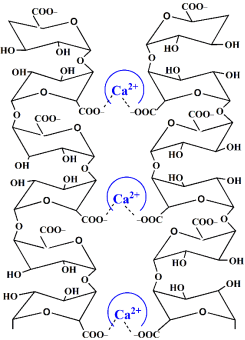
Before the pectin presence in flax fibers will be analyzed in detail, it is necessary to remember the superficial character of the body image on the Turin Shroud which is its unique property. The linen of the Shroud is made from threads twisted from flax fibers of 10-20 μm in diameter. Only top fibrils of each thread are colored, and moreover, the yellowing of each fiber forming the image is observed only at the very top layer . Recently some investigators accepted that only the primary cell wall (PCW) of the linen fiber, with the thickness of 0.2 μm, is colored . Thus, for further discussion one should remember that the PCW of higher plants contains mostly polysaccharides: cellulose and hemicellulose fibers forming an ordered network which is embedded in an amorphous matrix composed of pectins . The PCW of linen fibers consists of cellulose (approximately 25-33% of dry mass), hemicelluloses (25%) and pectins (30-40%) . Pectin in the PCW of flax fibers is a heteropolysaccharide with varied structures but mainly a linear homogalacturonan chain (HG) consisting of α-(1−4)-linked D-galacturonic acid units (i.e., the sugar similar to glucose but with the carboxylic group) and hairy regions of rhamnogalacturonan containing other polysaccharides particularly rhamnose . Scheme of a main HG chain (up to 65% of pectin) is shown in Figure 1. It is usually assumed that aging process of linen threads starts from hemicelluloses (which are less crystalline and thus more easily penetrated by water and easier oxidized than cellulose) because pectins are destroyed by microorganisms during the retting process. It is documented that pectins from the so-called middle lamella (connecting PCW of adjacent fibrils) were completely removed during retting processes of flax. However, it looks probable that some pectins can survive in the PCW because too long retting results in worse mechanical properties of threads and thus is usually avoided. Pectin’s presence in linen of Turin Shroud was confirmed by positive pectinase test . Moreover, the presence of calcium uniformly distributed on the Shroud is in full agreement with that view because as flax maturates, pectins became less methylated but form more cross-linked complexes with calcium ions as shown in Figure 1. Carboxyl anions detected in Shroud samples can also come from pectin chains in the PCW. A possible role of pectins at the beginning of ageing process of linen was not considered yet.
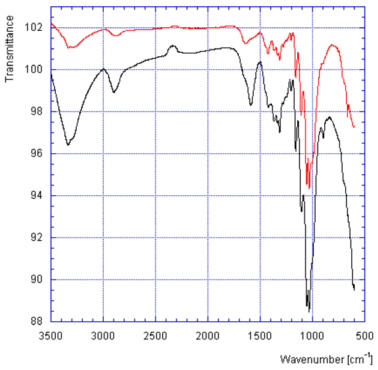
The Fourier Transform Infrared (FTIR) spectroscopy is a good tool for identifying specific organic groups, and it was used recently in attenuated total reflectance (ATR) mode to analyze pectins, hemicelluloses and cellulose in plant cell walls as well as in analysis of main components of flax fibers . However, assigning the observed vibrations to a specific polysaccharide can be challenging due to the presence of same chemical groups in them as well as the overlap of some IR bands. Nevertheless, Fanti compared ATR FTIR spectra of body image fiber originating from the sticky tape STURP-1EB (calf/ankle area) with the fiber from the non-image area coming from a corner of Turin Shroud . These spectra are shown in Figure 2. The observed differences in both spectra were discussed in terms of oxidation and dehydration reactions of cellulose that are responsible for the formation of the image according to a commonly accepted chemical explanation . The broad band observed at 3340 cm-1 corresponds to hydroxyl O-H stretching vibrations in a great number of hydroxyl groups characteristic for all polysaccharides including cellulose as well as pectin. The huge increase of that band in the spectrum of the image fiber was discussed in terms of oxidation of flax fibers resulting from the formation of secondary alcohol from hydrocarbon . However, in our opinion -OH groups were formed most probably via the cleavage of glycosidic bonds O-C-O which can occur in both flax components: cellulose and pectin. Depolymerization of polysaccharide components of linen was confirmed by the surface “corrosion” of fibrils that formed the image , which were easier to remove using adhesive tapes. Partial cleavage of glycosidic bonds in pectins can also explain the negative result of pectinase test although it should be notice that small IR peaks around 1140 – 1160 cm-1 evident in both spectra in Figure 2 are usually ascribed in the literature to asymmetric stretching vibrations of glycosidic bonds in both cellulose and pectin.
Figure 1. Schematic representation of two homogalacturonan chains forming complex with calcium ions. Schematic representation of two homogalacturonan chains forming complex with calcium ions.
Figure 2. ATR FTIR spectra of the Shroud body image fiber from the 1EB sticky type (black, lower plot) and a non-image fiber from the Shroud corner (red, upper plot). Reproduced from G. Fanti paper with written permission from the author. ATR FTIR spectra of the Shroud body image fiber from the 1EB sticky type (black, lower plot) and a non-image fiber from the Shroud corner (red, upper plot). Reproduced from G. Fanti paper with written permission from the author.
The peak around 2900 cm-1 also increased for the body image fiber, but it is not relevant for distinguishing among cellulose, hemicellulose and pectin because it is characteristic for symmetric and asymmetric stretching vibration of C-H bonds in all polysaccharides.
For the case of pectins (without ester linkage) extracted from the higher plant cell walls, two diagnostic peaks in IR transmission spectra were proposed at 1600 and 1420 cm-1 . The first one corresponds to antisymmetric COO- stretches and is also characteristic for pectin components: poly-galacturonic acid and rhamnogalacturonan . That peak is observed in the spectrum of body image fiber as the high narrow peak (Figure 2), though in the spectrum of non-image fiber in that region, there is only a small peak at 1640 cm-1 with the shape suggesting a merging of different vibrations. Bending vibrations of adsorbed water were observed at that frequency but cellulose is inactive at that region . Of course, the formation of carboxylic groups in the oxidation processes of -CH2OH groups from cellulose (according to a common interpretation of the image formation) can explain this peak. However, each glucose moiety has only one -CH2OH group and three >CHOH groups in the ring which should be oxidized in similar reactions to carbonyl groups. Carbonyl groups formed in the oxidation of cellulose in natural ageing processes as well as in photooxidation and hydrothermal degradation exhibit IR stretching C=O vibrations at 1720 – 1730 cm-1 . However, they are not visible in Figure 2. Thus, the carboxylic vibrations at 1600 cm-1 are rather originating from pectin COO- groups. In the spectrum of the non-image fiber, the peak at 1640 cm-1 corresponds in our opinion to pectin COO- groups cross linked to Ca2+ ions as is shown in Figure 1. It was suggested that the complexation of the pectic carboxylate groups with calcium ions shifts the absorption maximum to higher frequencies as observed in Figure 2. On the other hand, the peak around 1430 cm-1 seen only in the spectrum of non-image fiber is situated near the region of pectins vibrations. In particular, symmetric COO- stretches in pectins were observed at 1410 - 1420 cm-1 and were also seen in a spectrum of polygalacturonic acid . However, in general, vibrations from cellulose, hemicellulose as well as pectins were observed in the range of 1400-1440 cm-1, and therefore exact identification of the last-mentioned peak is not possible in Figure 2. Thus, analyzed spectra do not exclude the presence of pectins but more investigations are needed for the definitive proof.
4. Conclusion: Pectins and the Body Image Formation
It should be remembered that in early investigations of STURP team, Adler and Rogers observed that colored coating forming the image was easily “stripped off of the fiber and remained in the adhesive” tapes leaving colorless cellulose fibers. Thus, Rogers suggested that the body image was formed by a thin layer of impurities, which are less stable than cellulose, and confirmed the presence of polysaccharides of lower stability than cellulose when analyzing mass spectra after pyrolysis of fibers. He suggested the presence of starch. In our hypothesis, these polysaccharides can be identified as pectins. All experimental results discussed above can be rationalized assuming that pectic substances from linen fibers participate in the beginning of the body image formation on the Shroud. They were destroyed during this process in some activated chemical reactions, and thus pectin chains are absent in the body image areas and do not show fluorescence. If pectins in the PCW were more sensitive for energetic signals in the image formation than cellulose, the superficial character of the body image can be explained because pectins dominate only in the PCW. The hypothesis proposed can also explain a nonuniform yellowing of linen yarns creating body image areas where some individual fibers are colored but not others as well as striations on the body image, i.e., a discontinuous distribution of the yellow color along the yarn of the cloth. It can be easily understood that the distribution of pectins in the PCW after the retting process remains not uniform in neighboring flax fibers in contrary to a distribution of cellulose.
Further spectral analysis of different chemical groups on linen fibrils from samples of clear and body image areas already existing from the 1978 investigation should be undertaken for the support of the hypothesis under consideration.
Abbreviations

ATR

Attenuated Total Reflectance

CIE L

International Commission on Illumination Lab Color Space

FTIR

Fourier Transform Infrared

HG

Homogalacturonan

PCW

Primary Cell Wall

RGB

Red, Green, Blue Pixels

STURP

Shroud of Turin Research Project

UVIF

Ultraviolet Induced Fluorescence

Acknowledgments
The author thanks prof. Giulio Fanti for permission to reproduce Figure 2 from his paper.
Author Contributions
Jan Stefan Jaworski is the sole author. The author read and approved the final manuscript.
Funding
This work is not supported by any external funding.
Conflicts of Interest
The author declares no conflicts of interest.
References
[1] Morris, R. A., Schwalbe, L. A., London, J. R. X-ray Fluorescence Investigation of the Shroud of Turin. X-Ray Spectrometry. 1980, 9(2), 40-47.
[2] Pellicori, S. F. Spectral Properties of the Shroud of Turin. Applied Optics. 1980, 19(12), 1913-1920.
[3] Gilbert, R. Jr., Gilbert, M. M. Ultraviolet-visible Reflectance and Fluorescence Spectra of the Shroud of Turin. Applied Optics. 1980, 19(12), 1930-1936.
[4] Heller, J. H, Adler, A. D. Blood on the Shroud of Turin. Applied Optics. 1980, 19(16), 2742-2744.
[5] Pellicori, S. F., Evans, M. S. The Shroud of Turin Through the Microscope. Archeology. 1981, 34, 34-43.
[6] Miller, V. D., Pellicori, S. F. Ultraviolet Fluorescence Photography of the Shroud of Turin. Journal of Biological Photography. 1981, 49(3), 71-85.
[7] Heller, J. H., Adler, A. D. A Chemical Investigation of the Shroud of Turin. Canadian Society of Forensic Science Journal. 1981, 14(3), 81-103.
[8] Schwalbe, L. A., Rogers, R. N. Physics and Chemistry of the Shroud of Turin. A Summary of the 1978 Investigations. Analytica Chimica Acta. 1982, 135, 3-49.
[9] Jumper, E. J., Adler, A. D., Jackson, J. P., Pellicori, S. F., Heller, J. H., Druzik, J. R. A Comprehensive Examination of the Various Stains and Images on the Shroud of Turin. Archeological Chemistry III, ACS Advances in Chemistry, Lambert, J. B., Ed., American Chemical Society, Washington D. C.; 1984, 205, 447-476.
[10] Baima Bollone, P., Jorio, M., Massaro, A. L. La Dimostrazione della Presenza di Tracce di Sangue Umano sulla Sindone. Sindon. 1981, 30, 5-8.
[11] Baima Bollone, P., Gaglio, A., Grillo, C., Zanin, A. Ricerca degli Antigeni M, N ed S Nelle Tracce di Sangue sulla Sindone. Sindon. 1985, 34, 9-13.
[12] Fanti, G., Zagotto, G. Blood Reinforced by Pigments in the Reddish Stains of the Turin Shroud. Journal of Cultural Heritage. 2017, 25, 113-120.
[13] Laude, J-P., Fanti, G. Raman and Energy Dispersive Spectroscopy (EDS) Analyses of a Micro Substance Adhering to a Fiber of the Turin Shroud. Applied Spectroscopy. 2017, 71(10), 2313-2324.
[14] Di Lascio, A., Di Lazzaro, P., Iacomussi, P., Missori, M., Murra, D. Investigating the Color of the Blood Stains on Archeological Cloths: the Case of the Shroud of Turin. Applied Optics. 2018, 57, 6626-6631.
[15] Fanti, G. New Insights on Blood Evidence from the Turin Shroud consistent with Jesus Christ’s Tortures. Archives of Hematology Case Reports and Reviews. 2024, 9(1), 1-15.
[16] Pellicori, S. UV Fluorescence Imagery of the Turin Shroud – Digitally Revisited. International Journal of Archeology. 2020, 8(2), 32-36.
[17] Schwalbe, L., Pellicori, S. Analysis of Photoelectric Colorimetry and Fluorimetry of the Turin Shroud. International Journal of Archeology. 2023, 11(1), 1-8.
[18] Pellicori, S. Photoelectric UV Fluorescence Investigation of the Turin Shroud Revisited. International Journal of Archeology. 2025, 13(1), 63-68.
[19] McAvoy, T. Shroud of Turin Ultraviolet Light Images: Color and Information Content, Applied Optics. 2021, 60, 6604-6613.
[20] McAvoy T. Information in the Shroud of Turin about its Variable Molecular Properties, International Journal of Archeology. 2024, 12, 58-67.
[21] Rogers, R. N. A Chemist’s Perspective on the Shroud of Turin, Schwortz, B. M., Publ., 2008, p. 18.
[22] Mottin, S. Problematic of Metrology on the Shroud of Turin. UV Fluorescence of Ancient Cloths. In International Scientific Symposium on The Shroud of Turin, Nice (France), 1997; Actes du III Symp. Sci. Inter. Nice, CIELT, Paris (1997).
[23] Adler, A. D. The Nature of the Body Images on the Shroud of Turin. In Proceedings of the 1999 Shroud of Turin International Research Conference, Walsh, B., Ed., Richmond, USA, 1999; also: The Orphaned Manuscript: A Gathering of Publications on the Shroud of Turin by Alan D. Adler, Shroud Spectrum International, Special Issue, Crispino, D., Ed., 2002, 103-112.
[24] Ezati, P., Rhim, J-W. Pectin/Carbon Quantum Dots Fluorescent Film with Ultraviolet Blocking Property through Light Conversion, Colloids and Surfaces B: Biointerfaces. 2022, 219, 112804.
[25] Sakhno, T., Ivashchenko, D., Semenov, A., Ivashchenko, O., Sakho, Y. Clusteroluminogenic Polymers: Application in Biology and Medicine, Low Temperature Physics. 2024, 50, 257-267.
[26] Fanti, G., Botella, J. A., Di Lazzaro, P., Heimburger, T., Schneider, R., Svensson, N. Microscopic and Macroscopic Characteristics of the Shroud of Turin Image Superficiality. Journal of Imaging Science and Technology. 2010, 54(4), 040201-1/8.
[27] Di Lazzaro, P., Murra, D., Nichelatti, E., Santoni, A., Baldacchini, G. Superficial and Shroud-like Coloration of Linen by Short Laser Pulses in the Vacuum Ultraviolet. Applied Optics. 2012, 51, 8567-8578.
[28] O’Neill, M. A., York, W. S. The composition and structure of plant primary cell walls. In The plant cell wall, Rose J. K. C., Ed., Blackwell Publishing: Oxford, UK; 2003, pp. 3-7, 20-24.
[29] Szymanska-Chargot, M., Zdunek, A. Use of FT-IR Spectra and PCA to the Bulk Characterization of Cell Wall Residues of Fruits and Vegetables Along a Fraction Process. Food Biophysics. 2013, 8, 29-42.
[30] Szymanska-Chargot, M., Chylinska, M., Kruk, B., Zdunek, A. Combining FT-IR Spectroscopy and Multivariate Analysis for Qualitative and Quantitative Analysis of the Cell Wall Composition Changes During Apples Development. Carbohydrate Polymers. 2015, 115, 93-103.
[31] Liu, X., Renard, C. M. G. C., Bureau, S., Le Bourvellec, C. Revisiting the Contribution of ATR-FTIR Spectroscopy to Characterize Plant Cell Wall Polysaccharides. Carbohydrate Polymers. 2021, 262, 117935.
[32] Melelli, A., Jamme, F., Beaugrand, J., Bourmaud, A. Evolution of the Ultrastructure and Polysaccharide-ride Composition of Flax Fibres Over Time: When History Meets Science. Carbohydrate Polymers. 2022, 291, 119584; pp. 4-10.
[33] Séné, C. F. B., McCann, M. C., Wilson, R. H., Grinter, R. Fourier-Transform Raman and Fourier- Transform Infrared Spectroscopy. An Investigation of Five Higher Plant Cell Walls and Their Components. Plant Physiology. 1994, 106, 1623-1631.
[34] Synytsya, A., Copikova, J., Matejka, P., Machovic, V. Fourier Transform Raman and Infrared Spectroscopy of Pectins. Carbohydrate Polymers. 2003, 54, 97-106.
[35] Margariti, C. The Application of FTIR Microspectroscopy in a Non-invasive and Non-destructive Way to the Study and Conservation of Mineralized Excavated Textiles. Heritage Science. 2019, 7: 63.
[36] Garside, P., Wyeth, P. Identification of Cellulosic Fibres by FTIR Spectroscopy. Thread and Single Fibre Analysis by Attenuated Total Reflectance. Studies in Conservation. 2003, 48, 269-275.
[37] Fanti, G. Optical Features of Flax Fibers Coming from the Turin Shroud. SHS Web of Conferences. 2015, 15, 00004.
[38] Poletto, M., Pistor, V., Zattera, A. J. Structural Characteristics and Thermal Properties of Native Cellulose. In Cellulose - Fundamental Aspects, Van de Ven, T. G. M., Ed., InTech, 2013, Ch. 2.
[39] Fanti, G., Baraldi, P., Basso, R., Tinti, A. Non-destructive Dating of Ancient Flax Textiles by Means of Vibrational Spectroscopy. Vibrational Spectroscopy. 2013, 67, 61-70.
[40] Proniewicz, L. M., Paluszkiewicz, C., Weselucha-Birczynska, A., Majcherczyk, H., Baranski, A., Konieczna, A. FT-IR and FT-Raman Study of Hydrothermally Degradated Cellulose. Journal of Molecular Structure. 2001, 596, 163-169.
[41] Chatjigakis, A. K., Pappas, C., Proxenia, N., Kalantzi, O., Rodis, P., Polissiou, M. FT-IR Spectroscopic Determination of the Degree of Esterification of Cell Wall Pectins from Stored Peaches and Correlation to Textural Changes. Carbohydrate Polymers. 1998, 37, 395-408.
[42] Rogers, R. N. A Chemist’s Perspective on the Shroud of Turin, Schwortz, B. M., Publ., 2008, pp. 44-45.
Cite This Article
  • APA Style

    Jaworski, J. S. (2025). The Role of Pectins in the Body Image Formation on the Turin Shroud. International Journal of Archaeology, 13(2), 178-184. https://doi.org/10.11648/j.ija.20251302.15

    Copy | Download

    ACS Style

    Jaworski, J. S. The Role of Pectins in the Body Image Formation on the Turin Shroud. Int. J. Archaeol. 2025, 13(2), 178-184. doi: 10.11648/j.ija.20251302.15

    Copy | Download

    AMA Style

    Jaworski JS. The Role of Pectins in the Body Image Formation on the Turin Shroud. Int J Archaeol. 2025;13(2):178-184. doi: 10.11648/j.ija.20251302.15

    Copy | Download

  • @article{10.11648/j.ija.20251302.15,
      author = {Jan Stefan Jaworski},
      title = {The Role of Pectins in the Body Image Formation on the Turin Shroud},
      journal = {International Journal of Archaeology},
      volume = {13},
      number = {2},
      pages = {178-184},
      doi = {10.11648/j.ija.20251302.15},
      url = {https://doi.org/10.11648/j.ija.20251302.15},
      eprint = {https://article.sciencepublishinggroup.com/pdf/10.11648.j.ija.20251302.15},
      abstract = {UV-induced fluorescence (UVIF) data that were obtained in the 1978 investigation of the Turin Shroud, were recently revisited by Pellicori supporting different behavior of background, non-image, and body image areas. Based on the experimental literature results, the chemical nature of that difference is discussed here. Former enzymatic analysis using pectinase indicated the presence of pectic substances, but only for fibers extracted from the background non-image areas. On the other hand, the high content of pectins in the primary cell wall (PCW) of flax fibers is well documented. The PCW is a thin outermost layer of fibers of approximately 0.2 μm, which corresponds to the layer where the body image is seen. Pectins are easier oxidized and destroyed than cellulose, the main component of the linen. In the present paper, pectins from the PCW of the linen fibers are proposed to participate in the initial stage of body image formation on the Turin Shroud, although they have been destroyed in that process. To demonstrate the presence of pectins in the fibers from the Shroud, the results of Fourier Transform Infrared (FTIR) spectroscopy in attenuated total reflectance (ATR) mode obtained by Fanti for body image and non-image fibers have been compared. Analyzed spectra do not exclude the presence of pectins. Thus, participation of pectins can explain some unique properties of the Shroud image, i.e., superficiality of the body image and nonuniform distribution of its yellow color.},
     year = {2025}
    }
    

    Copy | Download

  • TY  - JOUR
    T1  - The Role of Pectins in the Body Image Formation on the Turin Shroud
    AU  - Jan Stefan Jaworski
    Y1  - 2025/12/29
    PY  - 2025
    N1  - https://doi.org/10.11648/j.ija.20251302.15
    DO  - 10.11648/j.ija.20251302.15
    T2  - International Journal of Archaeology
    JF  - International Journal of Archaeology
    JO  - International Journal of Archaeology
    SP  - 178
    EP  - 184
    PB  - Science Publishing Group
    SN  - 2330-7595
    UR  - https://doi.org/10.11648/j.ija.20251302.15
    AB  - UV-induced fluorescence (UVIF) data that were obtained in the 1978 investigation of the Turin Shroud, were recently revisited by Pellicori supporting different behavior of background, non-image, and body image areas. Based on the experimental literature results, the chemical nature of that difference is discussed here. Former enzymatic analysis using pectinase indicated the presence of pectic substances, but only for fibers extracted from the background non-image areas. On the other hand, the high content of pectins in the primary cell wall (PCW) of flax fibers is well documented. The PCW is a thin outermost layer of fibers of approximately 0.2 μm, which corresponds to the layer where the body image is seen. Pectins are easier oxidized and destroyed than cellulose, the main component of the linen. In the present paper, pectins from the PCW of the linen fibers are proposed to participate in the initial stage of body image formation on the Turin Shroud, although they have been destroyed in that process. To demonstrate the presence of pectins in the fibers from the Shroud, the results of Fourier Transform Infrared (FTIR) spectroscopy in attenuated total reflectance (ATR) mode obtained by Fanti for body image and non-image fibers have been compared. Analyzed spectra do not exclude the presence of pectins. Thus, participation of pectins can explain some unique properties of the Shroud image, i.e., superficiality of the body image and nonuniform distribution of its yellow color.
    VL  - 13
    IS  - 2
    ER  - 

    Copy | Download

Author Information
  • Faculty of Chemistry, University of Warsaw, Warsaw, Poland

    Biography: Jan Stefan Jaworski is a professor emeritus at University of Warsaw, Faculty of Chemistry, in Poland. His academic career was connected with that Department but he spent a few years at University of Guelph, Canada, as a post doc (1980-1982) and a visiting professor (1994-1995). He was a vice-president of Polich Chemical Society (1998-2000). He published over 60 peer-reviewed original papers and a number of reviews including chapters in 8 monographic books on electrochemistry of different groups of organic compounds. Since 1982, he has followed the scientific research of the Turin Shroud and popularized it in numerous lectures and one book in Polish (2020). He is also the author of a few entries to Digital Sindonological Lexicon (2022).

    Research Fields: Electrochemistry of organic compounds, Solvent effects, Reactivity of organic radical ions, Physicochemical analytical methods, Properties and analysis of natural materials.

  • Figure 1

    Figure 1. Schematic representation of two homogalacturonan chains forming complex with calcium ions.
  • Figure 2

    Figure 2. ATR FTIR spectra of the Shroud body image fiber from the 1EB sticky type (black, lower plot) and a non-image fiber from the Shroud corner (red, upper plot). Reproduced from G. Fanti paper [37] with written permission from the author.